Reporting Time Pay in California: What LA Workers Are Owed When Sent Home Early

Reviewed By Managing Attorney - David Mallen
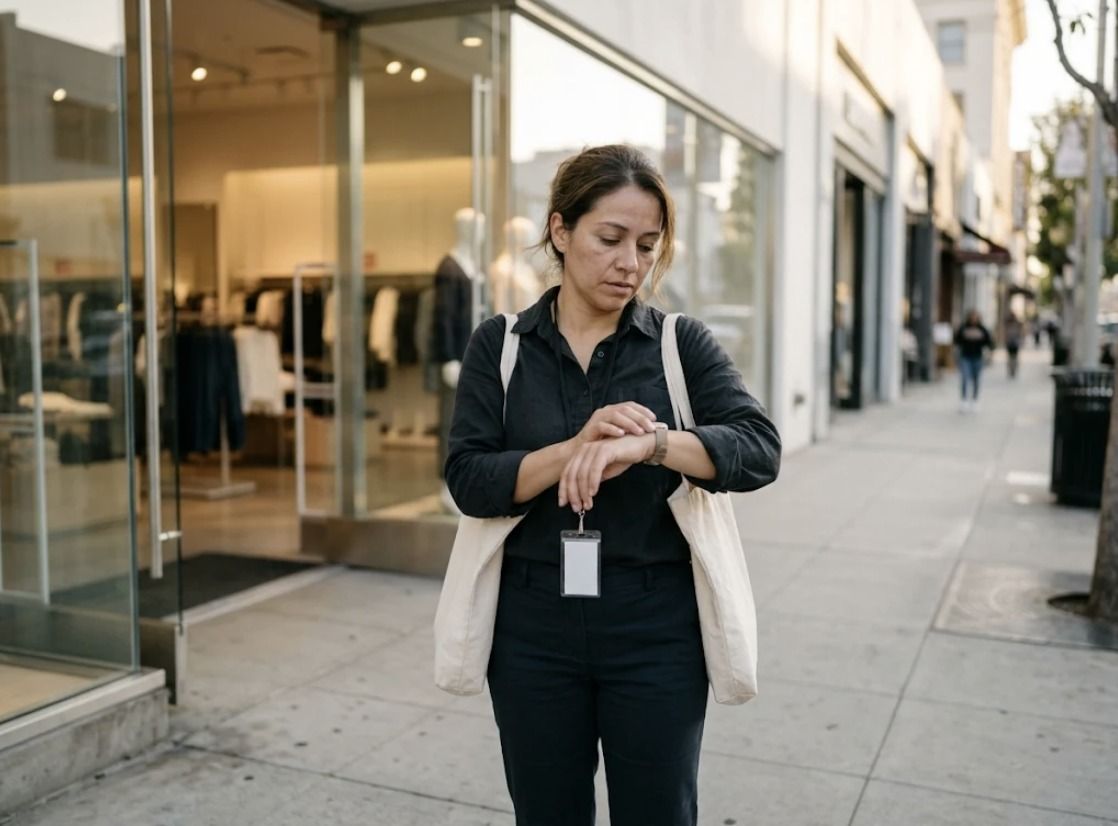
Getting sent home an hour into an eight-hour shift is frustrating, especially when that paycheck already has a job to do. California employers can usually cut a shift short. That doesn’t always mean they can skip paying for it.
Under the rules for reporting time pay in California, your employer may owe you wages for part of the shift you never got to work. For hourly workers in Los Angeles who get sent home on slow days, that missing pay can add up quickly. Here is how the rule works, in plain English.
What You’ll Learn From This Article
- What triggers reporting time pay, including the “less than half” rule
- How to work out the hours you may be owed, using real shift examples
- Why a mandatory call-in or log-in can count as reporting to work
- The narrow exceptions, and the common excuses that don’t qualify
- How LA’s Fair Work Week rules add protection for retail workers
- What to save, and where to turn, if your paycheck came up short
What Is Reporting Time Pay in California?
Reporting time pay is a form of wages that compensates employees who are scheduled to report to work but who are not put to work, or are given less than half of their usual or scheduled day’s work.
The idea is simple. Showing up for a shift costs you something: gas or bus fare, child care, maybe another job you turned down to keep that day open. When an employer schedules you and then sends you home, the law moves part of that cost back where it belongs.
The rule comes from Section 5 of the Industrial Welfare Commission wage orders, which cover most California industries. Under Murphy v. Kenneth Cole, reporting-time pay counts as wages, so unpaid amounts due when a job ends may support waiting-time penalties under Labor Code § 203. It is not a favor. It is pay the law treats as earned.
When Your Employer Must Pay Reporting Time Pay

Most claims fall into one of four situations, and each one turns on how much work you actually got compared with what you were scheduled for.
You Were Sent Home Before Working Half Your Shift
This is the situation most people run into. Say you were scheduled for eight hours and sent home after three. You got less than half of your scheduled shift, so reporting time pay applies.
There is a clear limit. Reporting time pay is owed only when an employer ends the shift before it is halfway completed. If the employee has worked more than half the scheduled shift, the employee is simply paid for the hours worked.
You Showed Up and Were Not Put to Work at All
Sometimes the shift ends before it starts. You arrive on time, and a manager tells you to go home. You still reported to work as scheduled, so your employer may owe you reporting time pay even though you worked zero hours.
You Were Called Back a Second Time the Same Day
A separate rule covers a second trip in one workday. If an employee reports a second time and gets less than two hours of work, they are paid for two hours at their regular rate of pay. Getting called back for a one-hour training meeting after your shift is a common example.
You Had to Call In or Log On Before a Possible Shift
Many LA retail and service jobs use “call to confirm” shifts. In Ward v. Tilly’s (2019), a California Court of Appeal ruled that an employer must pay reporting time pay to employees who are required to call in two hours before a potential shift to learn whether they are needed, when they are told not to come in that day. Physical reporting is not required, and logging on remotely or calling in can qualify.
How to Calculate Reporting Time Pay
The formula has three parts. Employees who report but are not put to work, or are given less than half their usual or scheduled day’s work, are paid half the day’s work, in no event for less than two hours nor more than four hours, at the regular rate.
The hours you already worked count toward that total. If you were scheduled for eight hours and worked one, your employer must pay you four hours in total: the hour you worked plus three hours of reporting time pay.
| Scheduled shift | Worked before sent home | Total hours of pay you may be owed |
|---|---|---|
| 8 hours | 1 hour | 4 hours (1 worked + 3 reporting time pay) |
| 6 hours | 0 hours | 3 hours |
| 10 hours | 2 hours | 4 hours (the 4-hour cap applies) |
| 3 hours | 1 hour | 2 hours (the 2-hour minimum applies) |
| 8 hours | 5 hours | 5 hours (more than half worked, so no reporting time pay) |
To turn those hours into dollars, multiply them by your regular hourly rate. Minimum wage in Los Angeles changes each year, so use the rate on your current pay stub, not a number from memory.
Does Reporting Time Pay Count Toward Overtime?
Reporting time pay does not count toward overtime. It is not used in determining if overtime is due. The hours you actually worked still count toward daily and weekly overtime as usual.
If your pay includes commissions, bonuses, or more than one hourly rate, the regular rate gets harder to calculate. That is a good time to have someone look at your pay records.
When Reporting Time Pay Does Not Apply

The wage orders list a short set of exceptions. Under IWC Orders 1 through 16, Section 5(C), reporting time pay does not apply:
- When the employer’s operations cannot begin or continue due to threats to employees or property
- When public utilities fail to supply electricity, water, or gas
- When the interruption of work is caused by an Act of God or other cause not within the employer’s control
- To employees on paid standby status
It also doesn’t apply when you decide to leave. No reporting time pay is due if the employee chose to leave work to attend to a personal matter.
Some of the most common reasons for sending workers home are not exceptions. A slow afternoon or too many people on the schedule doesn’t excuse the pay. A manager’s frustration doesn’t either: performing at a level the employer finds unacceptable does not fall within any of the exceptions. Every case depends on its own facts.
Who Is Covered by California’s Reporting Time Pay Rule?
Reporting time pay generally protects non-exempt employees covered by the California wage orders. It applies to both full-time and part-time employees.
In Los Angeles, that includes many hourly workers in retail, restaurants, warehouses, healthcare, office administration, delivery and driving jobs, and technical roles.
Most exempt salaried employees fall outside this rule. Still, a job title alone doesn’t decide whether you are exempt. If you are paid a salary but spend most of your day on the same tasks as hourly coworkers, your classification may deserve a closer look.
LA retail workers should also know about a second, local layer of protection.
Reporting Time Pay vs. LA’s Fair Work Week Predictability Pay
The City of Los Angeles has its own scheduling law. The Fair Work Week Ordinance requires covered retail employers with 300 or more employees globally to provide work schedules at least 14 days in advance and pay predictability pay for schedule changes made after that. It took effect on April 1, 2023.
Los Angeles County followed with a similar rule for unincorporated areas. As of July 1, 2025, retail businesses with 300 or more employees worldwide must provide employees in unincorporated Los Angeles County with predictable work schedules, advance notice of shifts, the right to request or decline schedule changes, adequate rest between shifts, and predictability pay.
These laws appear to be working. A study of Los Angeles retail chains published in Management Science found that the share of shifts scheduled with less than 14 days’ notice fell from 49.9% to 34.8%, with no evidence of reduced work hours or reduced hiring.
What to Do If You Were Sent Home Early and Not Paid

You don’t need every answer before you act. A few simple steps can protect your position.
Gather Your Records
Save anything that shows what you were scheduled to work and what actually happened:
- Posted schedules or screenshots from your scheduling app
- Texts, emails, or app messages telling you to leave or not come in
- Time punches and pay stubs for the affected pay periods
- A short note for each incident with the date, time, the manager’s name, and what was said
Know Your Options
Many workers have never heard of this rule, and that is not your fault. Research published in Social Forces found only partial compliance with reporting pay policies at best, and very few covered workers correctly identified that the state policy existed. When workers learned about reporting pay, they were significantly more likely to recommend seeking compensation for a shift cut.
Once you know your rights, you can choose how to act on them:
- Ask payroll or HR in writing. Some errors are honest mistakes.
- File a wage claim with the Labor Commissioner’s Office or sue in court.
- Speak with an employment attorney, especially if coworkers were affected too or you have already left the job.
Asking about your pay is protected. Retaliation complaints are also available if your employer punishes you for raising the issue. Wage claims have time limits, so waiting too long can cost you options.
Key Takeaways for LA Workers
Reporting time pay in California applies when you report for a shift and get less than half of it. You are typically owed half of your scheduled shift, between two and four hours of pay, at your regular rate. A few narrow exceptions exist, but a slow day or a manager’s bad mood is not one of them. If you work for a large Los Angeles retailer, Fair Work Week rules may give you even more protection.
Frequently Asked Questions
1. Is it legal for my employer to send me home early in California?
Usually, yes. But if you worked less than half of your scheduled shift, your employer may owe you reporting time pay for part of the time you didn’t get to work.
2. How much reporting time pay am I owed in California?
Generally, half of your scheduled shift, with a minimum of two hours and a maximum of four, paid at your regular rate. Any hours you already worked count toward that total.
3. Do I get reporting time pay if my shift is canceled before I arrive?
Often not, if your employer told you before you reported. The answer can change if your employer required you to call in or log on to confirm the shift, or if LA’s Fair Work Week law covers your job.
4. Does reporting time pay apply if I was sent home for poor performance?
If you worked less than half your shift, it likely does. The Labor Commissioner does not treat an employer’s view of your performance as an exception.
5. Can my employer punish me for asking about reporting time pay?
No. Retaliating against you for asking about your wages or filing a claim is illegal. If it happens, you can file a retaliation complaint and talk with an employment attorney about your options.
Talk With a Los Angeles Employment Attorney
If your hours were cut and your paycheck doesn’t seem right, a short, confidential conversation can help you find out whether you may be owed money. At Employee Law Group, you speak directly with a lawyer who listens to what happened and clearly explains your options.
We offer free phone and Zoom consultations to employees in Los Angeles and throughout California. There are no upfront fees, and you pay only if we win your case. Call or text (310) 606-0065, or send us a message through our contact form whenever you’re ready.

Managing Attorney - David Mallen
David Mallen is the managing attorney at Employee Law Group in Torrance, California, and a respected labor and employment lawyer who has represented thousands of workers since beginning his practice in 1992. He has been recognized as a Southern California Super Lawyer every year from 2004 to the present.